

CONGRATS TO 2026-2027 RESIDENT ARTIST: GOLDIE PATRICK

Photo by Kasim George
Click here for full press release
Goldie Partrick’s Bio: I am a woman named after and for three generations before me. My covenant to write is sometimes for the womxn before me, who have stories untold, and names erased. I have a strong tie with them; they speak, I listen, and write it all down. I am known by many names, “Sister Goldie” for my community work. Ifayosola Osunjaiye for my spiritual practice in Ifa. I’m a verse-based performance artist and writer, who writes as healing and testimony to mine and my ancestors’ survival. I am a descendant of Nigerian and Cameroonian Africans enslaved in South Carolina and Alabama. All these people and truths live in everything I do. The assertion of my diasporic identity punctuates my covenant to write, direct and lead of and between, both past and future: ancestor and child. It is to counter the forced silence and invisibility of Black womxn and girls. As a nurturer to the next generation of Black theatermakers, I spent years leading hundreds of Black girls through rites of passage, where theatre and poetry were our blueprints. My work is responsibility and privilege, both offering and obligation.
I center Blackness and spirituality in my work which ignites the potential of my work as a generator to healing and social justice and of intergenerational community healing. With caring intent I take pride in stewarding stories of my own as a writer and of others as a director. I have worked for over two decades as a writer, director, producer, educator and cultural worker. I am the product of Detroit poetry scenes, Black theater collegiate legacy, and the small Black and brown lead hip hop theatre movement from the 2000’s. In these spaces I was invited and encouraged to explore my voice and aesthetic. I studied how stories were born from connection and shaped with many eyes and voices. This is my approach to direction; empower everyone to crave the same freedom. Most importantly I was inspired to fully charge my work with my social and political themes. My work is to be a vehicle towards revolution and transformation.
For close to a decade I conjured up, led, and produced through a small theatre company, FRESHH Inc Theatre Company. I would often sit on grant panels where large white institutions received millions of grant dollars to “diversify” their season with one Black play. Many of those theaters didn’t have any full-time Black women on staff or on their board. This felt performative and ineffective. So I started FRESHH, to respond to the false notion that Black women weren’t in theater and were hard to find. We had an all Black woman team for every production for over five seasons. A Black Technical Director, Stage Manager, Acting ensemble, playwrights and directors. And then we taught and mentored more Black women into these roles. The audience members became board members of our theater company. Our shows sold out almost every run; with diverse audiences from our community. Because even though we were Black women centered, that center extends far and wide. I believe this to be true about any disenfranchised group and community. If you make space for them to be centered, and to have a voice to tell their stories, and see themselves, then you widen your world. This fuels my passion to reshape what ‘mainstream’ theater looks like. And is the call I answer when I serve as director, writer, dramaturg, or producer on a project.
After completing my MFA at Columbia University, I entered the New York theater community with great excitement and inspiration. But it hasn’t been commercial success that has motivated me most. It has been the small intimate communities of like-minded bold theatermakers that have drawn me in closest. I have worked closely with over 10 emerging playwrights as director to support new works of theirs. In this, I have been recognized and awarded as outstanding director for my work ushering these new works into the world. It is a deep passion I will continue to cultivate. And I have also found that its roots are wide. Beyond the festival space of new works, I am reaching back and working with younger generations to not only offer my experience as director, but to learn from them as they redefine theater and imagine its future.
For example, a former student I worked with when they were in high school in Detroit has become an emerging voice in the New York theater scene. When they reached out for me to direct their work and for guidance and support, I wanted to offer reassurance that what they speculated felt right. Working with Maleek Rae became a deeply personal and intimate space. I was able to bring into our process a reference point of those who developed and introduced similar aesthetics, defining styles innately belonging to the history of Black theatre that they had never learned in their extensive conservatory study.
Currently, a lecturer at SUNY Purchase teaching Performance in Black Theater, many of my students share the same curiousity and need to a tying together what they are creating and how it connects to the past and the future. I am glad to offer that to them. The tie that binds them is new and developing work. While balancing serving as associate director under the vision of developing plays and musicals that are Broadway bound, I am actively learning about so much more than directing. I am grateful to have a front row seat to how collaboration is embedded into a process to make it most successful. This idea that I once witnessed at the Hip Hop theater Festival decades ago, and adopted in my small grass roots theater, has proven to be true on the largest theater scale as well.
I once was haunted by the warning “Jack of many trades, but master of none”. Until I learned the proverb in full is, “A jack of all trades is a master of none, but oftentimes better than master of one.” This is my truth. I am a multi-hyphenated artist out of necessity and obligation to my many skills. Skills I have spent years studying and working to refine and connect. My art is the active demonstration of the intersectionality of my love for these things. I have sat intentionally in every seat at the table and it grew my compassion and collaboration.
FINALISTS
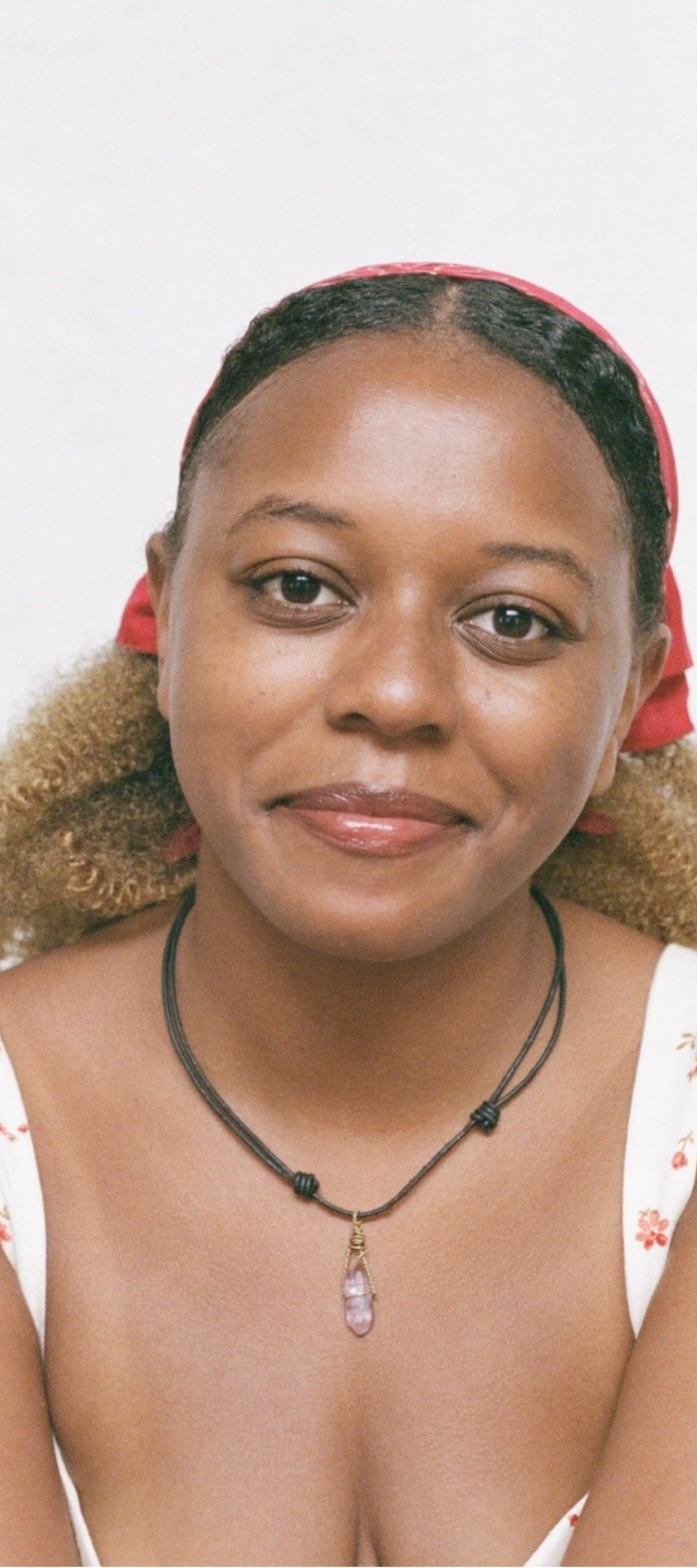
Photo by Ella Pennington
ALEXIS WOODARD
Alexis Kulani Woodard (she/her) is a Princess Grace Award Winner, Associate Artistic Director of Compagnia de’ Colombari, and 2025-2026 Directing Fellow at Rattlestick Theater
Select Directing Credits include: The Dark Lady (Synchronicity Theatre), Metamorphoses, SORT, Moe’s a D*ck, Stray Dogs, Measure for Measure (Yale Drama), Lungs (“I.L. Caragiale Bucharest”), Every Brilliant Thing (Yale Cabaret), Hamlet (The TINY Theater Company, Alliance Theatre: Guest Artist Series); HANDS UP: 7 Playwrights, 7 Testaments and Do You Love the Dark? (Alliance Theatre). Upcoming: World Premiere of Kelundra Smith’s Other Paths to God (Horizon Theater, October 2026), Marie Antoinette (Fordham University, January 2027).
Her work on HANDS UP: 7 Playwrights, 7 Testaments earned the production six Suzi Bass Award Nominations, including Best Direction, and a win for Outstanding Social Justice Production. Metamorphoses of four Connecticut BroadwayWorld Awards, including Best Direction. As a Spelman Leadership Fellow at the Alliance Theatre, Alexis served as the Co-Artistic Director of The Alliance’s inaugural 2020–21 Digital Season, where she produced Laugh Track, BackStage Atlanta, Spotlight Studio, and From the Ashes. Alexis also directed From the Ashes, an original adaptation of Ray Bradbury’s Fahrenheit 451 which was created in collaboration with the Alliance’s Teen Ensemble.
She has worked with directors Liz Diamond, Tamilla Woodard, Laurie Woolery, Hana Sharif, Leora Morris, and Khalia Davis. Associate directing credits include The Motion (Arena Stage), A Christmas Carol: The Live Radio Play, Working (Alliance Theatre), and the world premiere tri-production of Dream Hou$e (Alliance Theatre, Long Wharf Theatre, Baltimore Center Stage). She also has served as assistant director for Escaped Alone (Yale Repertory Theatre), A Christmas Carol (Repertory Theatre of St. Louis), A Kids Play About Racism (Bay Area Children’s Theatre). The Notebook, First National Tour (Drama League Assistant Director). MFA: David Geffen School of Drama at Yale

Photo by Taylor Hayden
HARRISON GUY
Harrison Guy is a nationally recognized choreographer, cultural architect, educator, and community strategist whose work bridges performance, cultural preservation, and institutonal leadership. For more than two decades, he has used movement, storytelling, and community engagement to illuminate Black cultural experiences and expand pathways for artistic excellence.
He is the founder and artistic director of Urban Souls Dance Company, one of Houston’s leading Black contemporary dance companies, where he has developed a body of work rooted in Black memory, identity, and liberation. His choreography has been presented nationally, including Can We Know the Sound of Forgiveness, which premiered at Rice University and was later performed at Carnegie Hall with dancers from The Ailey School. He also co choreographed Plumshuga: The Rise of Lauren Anderson alongside Stanton Welch, Artistic Director of Houston Ballet.
Beyond his artistic practice, Guy has emerged as a transformative cultural leader. As Director of Arts and Culture for the Fifth Ward Community Redevelopment Corporation, he leads Houston’s Fifth Ward Cultural Arts District, a State-designated African American Heritage District, where he oversees the historic DeLUXE Theater and advances arts driven strategies for community development, cultural preservation, and equitable neighborhood investment.
Guy is also the founder of Black Arts Movement Houston, the African American Dance Festival, Brave Bodies, and the Charles Law Community Archive, institutions and initiatives that strengthen Houston’s cultural ecosystem while amplifying Black artistic and LGBTQ histories.
A Dance/USA Fellow, Dance Source Houston Artistic Honoree, educator, and producer of the NAACP Image Award nominated film Memory Builds the Monument, Guy considers himself a student of the city. His work is dedicated to remembering, preserving, and amplifying the stories that shape Black communities while building institutions that willsustain future generations.
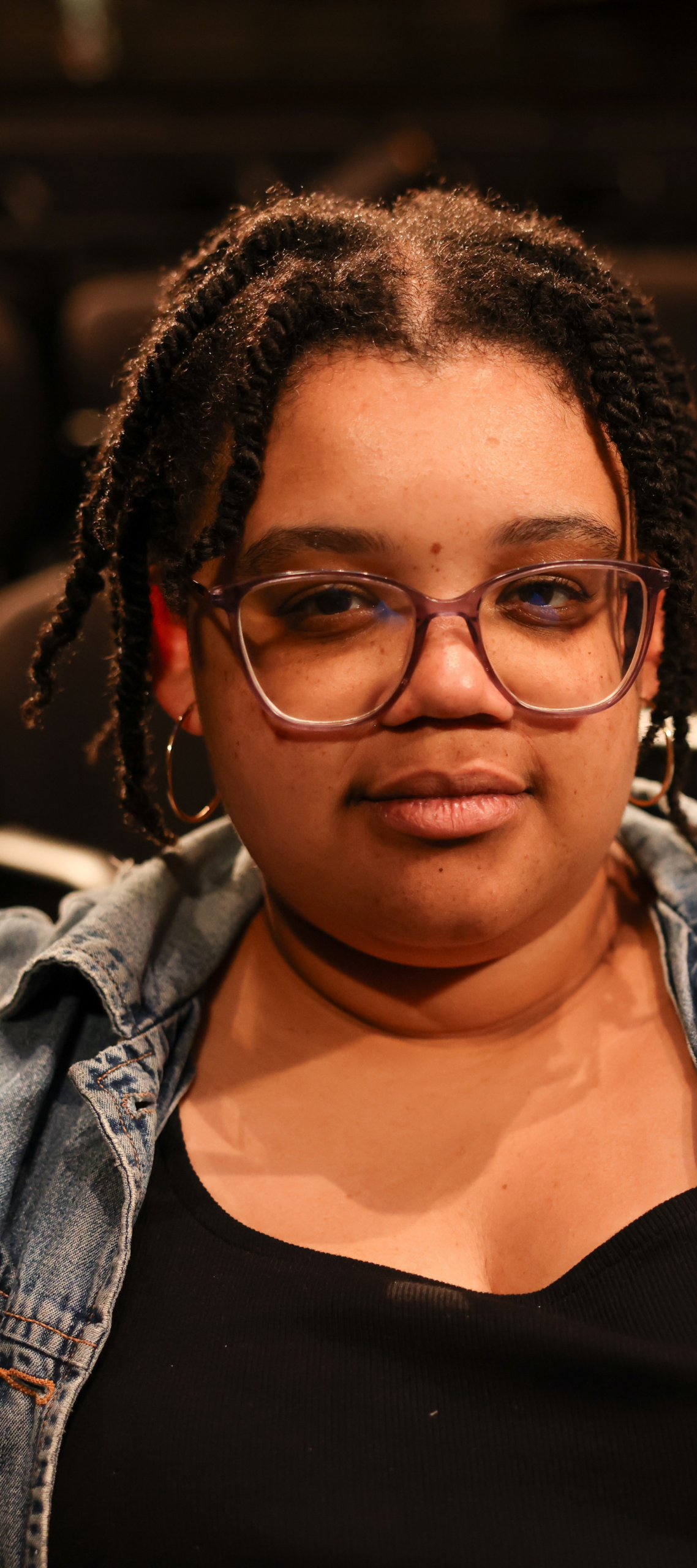
Photo by Michael J. Clarke
PASCALE FLORESTAL
Born and raised in Miami, Florida, Pascale Florestal is a first generation American from Haitian descent. She was introduced to theater accidentally in high school when she stumbled into the drama room looking to get community service hours for graduation. Since then she has been hooked on theatrical experiences that shed light on narratives of the global majority and the queer community. She graduated from Ithaca College with her Bachelors of Arts in Theater Studies. During her time in college she studied Theater in London through the IC London Program and spent a semester at the National Theater Institute at The Eugene O’Neill Theater.
My artistic journey began in education, first as an Education Apprentice and later as an Education Associate at the Huntington Theatre in Boston. Teaching felt instinctive, but directing was always the dream: guiding others through discovery, curiosity, and collective imagination. For seven years, I lived a dual life. By day, I worked in education and administrative roles at institutions such as Company One Theatre, the Boch Center, and the Boston Center for the Arts. By night and on weekends, I directed plays, building community, honing my craft, and learning how leadership functions both onstage and behind the scenes. This slow, intentional progression carried me from fringe productions to university theaters and eventually to mid-size professional spaces. When the COVID-19 pandemic shuttered Boston’s theaters, I transitioned into academia as an Assistant Professor at Boston Conservatory while also collaborating with the Mayor’s Office of Arts and Culture to support local cultural institutions through a moment of crisis.
As a Haitian American queer woman, my work is driven by a deep commitment to uplifting stories of the global majority and challenging dominant narratives about whose lives and experiences are worthy of attention. I am drawn to work that celebrates joy, complexity, and the fullness of Black life while also illuminating systems of inequity and possibility. I prioritize collaboration with emerging playwrights of color and artists whose work explores intersectionality, particularly within the LGBTQIA community. Theater, for me, is both a site of celebration and a tool for education, resistance, and imagination.
This commitment led me to The Front Porch Arts Collective, a Black theater company dedicated to advancing racial equity in Boston’s theater ecosystem. Since joining The Porch, I have grown alongside the institution, serving as Artistic Associate, Director of Education and Community Engagement, and now Associate Artistic Director. In these roles, I have initiated and stewarded programs that extend beyond the stage, including The Young Critics Program, which nurtures the next generation of arts critics, and a Financial Literacy Series that supports artists’ long-term sustainability. I have worked to expand apprenticeship and internship pathways, strengthen community engagement initiatives, and build meaningful partnerships with institutions such as Roxbury Community College to connect students with artists and conversations shaping Boston’s cultural landscape.
Through our strategic planning process, we named a bold vision for the next decade: becoming a nationally recognized home for African Diasporic storytelling. The work of The Front Porch has reimagined how theater can be experienced while actively addressing the challenge of diversifying audiences in Greater Boston. From the moment I joined the company, I knew I
wanted to help build something that did more than highlight Black and Brown stories. I wanted to be part of an institution grounded in the spirit, traditions, and cultural practices of our communities. This work has affirmed for me the abundance of brilliance among Black and Brown artists in Boston and beyond, and the urgency of creating structures that allow that brilliance to thrive.
During my time at The Front Porch Arts Collective I have continued my work as an educator at the Collegiate level. Currently I am an Assistant Professor of Theater at Boston Conservatory at Berklee College Music. I have also served as Visiting Guest Artists Professor at Suffolk University and just completed my Monan Professorship at Boston College in the Theater Arts Department. Through these professorships I have cultivated partnerships with these institutions while inspiring young people and theater and providing path ways and guidance into the Boston Theater Scene.
My mission as both an artist and administrator is to uplift stories and practitioners who have been pushed to the margins and rendered invisible, whether by creating space for audiences to see themselves reflected onstage or by offering programs where artists can ask questions, build knowledge, and imagine sustainable futures. At The Porch, we often say, “Everyone is invited to the cookout. We’re just going to teach you how to make the potato salad.” That ethos captures my approach to theater-making: generous, rooted in shared learning, and grounded in the belief that community is built through invitation, care, and accountability.
I believe my role as an artist is not to offer easy answers, but to hold space for the difficult conversations we long to have. Through my work, I strive to help create the world we are collectively yearning for: one where truth is honored, joy is centered, and everyone is seen, heard, and invited fully into the room.
ABOUT THE RESIDENCY
The Lloyd Richards New Futures Residency is a yearlong residency for mid-career directors and choreographers who are interested in institutional leadership. It is named after Lloyd Richards, a legendary leader of the American Theatre who directed some of the most important plays on Black life of the 20th century. The goals of this residency are to help develop artists to become artistic leaders in the American Theatre and support artists who are illuminating Black cultural experiences on stage. This residency provides unique exposure to the responsibilities of being an Artistic Director and the internal structure and workings of a theatrical institution by forging or deepening a relationship between the recipient artist and artistic leader.
The vision is to increase access, opportunities, and pathways to institutional leadership for mid-career directors and choreographers who are thinking strategically about how their work can increase Black cultural representation on stage within their local community and/or the industry at large. Each Resident Artist in the program receives a $50,000 grant. The Resident Artist is also guaranteed the opportunity to direct or choreograph a production at the Host Theatre within three years of the residency. The application process will take place in two rounds. For the first round, artists will apply individually to the program. The Richards Residency committee will select the top four candidates to move onto the second round. In the second round, the Resident Artist finalists will apply with an artistic leader at a theatre that would serve as the Mentor and Host Theatre for the Resident Artist. One Resident and Mentor/Host Theatre pair will be selected.
Evaluation Criteria: Applications will be evaluated based on the clear articulation of alignment with the goals of the program, timing as a mid-career artist for this type of opportunity, and clear sense of artistic voice as well.
Resident Artist applicants are not required to be connected with a Host Theatre/Mentor in order to apply. If helpful though, below is what we believe a well-suited partnership would look like.
An ideal partnership includes the following:
• Provide access to the Resident Artist to learn the inner workings of a theatre institution
• Both allow the artist to learn about artistic leadership and allow them to provide their own knowledge to the artistic staff at the organization so that both can learn grow – it should be a mutually beneficial partnership
• Collaborate on significant projects during the year of the residency
• Allow the artist to explore their artistry through a workshop or production within the three years after the residency is completed – must be on an SDC contract – we will prioritize organizations that provide a full production to the Resident Artist as an offering, but a workshop production will still be eligible and considered if that is in the best interest of the artist
• The Mentor at the Host Theatre must be in the artistic department of a theatre organization, and they must be an SDC Member
• The Resident Artist does not need to be an SDC Member
• In developing the Resident Artist’s time, there should be some flexibility for the residency since it was designed for mid-career artists, and the Resident Artist will likely have other artistic and/or personal obligations throughout the year of their residency. We understand that some portion of this residency may take place virtually, depending on the circumstances of a theatre’s given region.
PAST RECIPIENTS
2025
DOMINIC MOORE-DUNSON – Wilma Theater
2023
JON ROYAL – St. Louis Black Repertory Theatre
2022
KENDRA WARE – Actors Theatre of Louisville
2021
SHA CAGE – Cornerstone Theatre Company with Michael John Garces
ELIZABETH CARTER – Oregon Shakespeare Festival with
ABOUT LLOYD RICHARDS
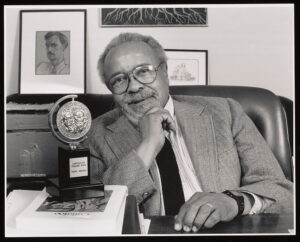
Lloyd Richards with his Tony Award for Best Direction for Fences, 1987 PHOTO c/o the Lloyd Richards Estate (Lloyd Richards Papers, Yale University).
The New Futures Residency is named for Lloyd Richards, whose career blazed a trail through our industry. Starting as an actor in 1940s New York, in 1956, Sidney Poitier arranged an interview for Richards with producers to direct Lorraine Hansberry’s new play A Raisin in the Sun. Richards’ work on the production garnered his first of five Tony nominations for Best Direction of a Play; he later won the award in 1987 for his work on Fences. Richards led the National Playwrights Conference (NPC) at the Eugene O’Neill Theatre Center for more than 30 years, developing work with hundreds of playwrights. From 1979-91, he was Artistic Director of Yale Repertory Theatre and Dean of the Yale School of Drama.
Richards was the first Black director to be nominated for and then to win the Tony Award for Best Direction. Aside from his first nomination for Raisin in the Sun, the other four honored his work directing August Wilson’s plays on Broadway. Richards’ collaborations with Hansberry and Wilson sustained his deepest beliefs about our industry: “We must each bring the wonder of our particular cultural heritage to the context of the here and the now. That is American Theatre—theatre which reaches into the ethnic memory of each of us and is informed by its wisdom, form, and artistry, and brings that to the context ‘now,’ where we all dwell, and informs the now, which provokes and enriches us all.” In addition to his artistic accolades, Richards was a staunch advocate for artists’ rights as workers. A founding member of SDC, Richards served as president from 1970 to 1980. He received the National Medal of Arts in 1993; he died in 2006. For Lloyd Richards’ full biography, click here.